

Great powers realize that the old "rules of the game" have collapsed, and no one can guarantee their survival anymore
The Doomsday Clock now stands at 85 seconds to midnight, marking the most dangerous moment in human history. Yet, even as global warnings of a nuclear Armageddon reach a fever pitch, world leaders seem to have lost their composure. The new nuclear agreement between the US and Saudi Arabia is merely the tip of the iceberg in a geopolitical domino effect pulling in nations from Turkey to Japan. This shift demonstrates that nuclear weapons remain the sole mechanism providing strategic deterrence while maintaining the balance of power among major global nations.
The US-Saudi Arabia agreement
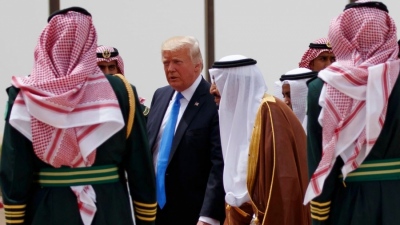
The nuclear cooperation agreement, known as the "123 Agreement," alongside what the Trump administration in the US described as a "bilateral safeguards agreement" between the US and Saudi Arabia, is likely to reignite concerns that it could pave the way for the latter to develop a nuclear bomb and encourage many other nations to follow suit. As it stands, the de facto leader of Saudi Arabia, Crown Prince Mohammed bin Salman (often referred to as MbS), has publicly declared that his country will acquire nuclear weapons if Iran obtains an atomic bomb. This warning gained significant traction when Saudi Arabia and nuclear-armed Pakistan signed a mutual defense pact in 2025. Pakistan's Minister of Defense, Khawaja Muhammad Asif, stated at the time that his country's nuclear program "would be placed at the disposal" of Saudi Arabia if necessary—a statement widely interpreted as a direct warning to Israel, long presumed to be the only state possessing a nuclear arsenal in the Middle East.
Naturally, the US-Saudi agreement is structured as a civilian nuclear pact intended to uphold global non-proliferation rules. However, numerous nuclear scientists express worry that "the devil is in the details" when negotiating civil energy deals. After all, Iran never openly claimed to be building a bomb either...
The core issue is that while there is no automatic link between civil energy and weapons proliferation, preventing the spread of technology requires strict nuclear fuel cycle governance. Achieving this necessitates a level of international consensus that has proven extraordinarily difficult to reach, as demonstrated by the Iran nuclear issue. This deal arrives amid heightened commentary regarding two converging trends: a growing number of threshold states harboring nuclear ambitions, and the questionable utility of nuclear weapons in winning contemporary conflicts. Recent operations in Ukraine and the historical outcome in Afghanistan are frequently cited as examples highlighting the limits of traditional nuclear powers like Russia and America.
Why more nations seek nuclear capabilities
To understand this shift, one must examine why an increasing number of countries seek to acquire nuclear weapons.
First, there is a pervasive doctrine that atomic arms serve as the ultimate insurance policy. The underlying belief is that possessing nuclear weapons effectively deters foreign invasion, a concept reinforced by North Korea's regime survival despite severe international sanctions.
Second, atomic capabilities offer status and leverage, ensuring a country receives a seat at the bargaining table alongside global powers. For instance, despite facing heavy economic sanctions, Russia and North Korea maintain direct diplomatic channels with the US and other major nations.
Third, regional rivalries drive proliferation dynamics. When one nation in a volatile area acquires capabilities, it forces neighboring states to evaluate their security posture. This pattern is evident between Iran and Saudi Arabia. Even Turkey, a NATO member state that hosts American ordnance, has signaled an interest in developing sovereign capabilities.
Turkish President Recep Tayyip Erdogan previously remarked: "It is unacceptable that we are not allowed to have them." While the country currently lacks a dedicated weapons program, its strategic intent remains explicit.
Concurrently, European strategists are evaluating independent nuclear deterrence frameworks that do not rely on the US. Discussions include establishing a broader European deterrent backed by the strategic forces of France and the UK, or enabling member states to maintain nuclear latency—the technological capability to assemble weapons rapidly if geopolitical conditions demand it.
Parallel debates in South Korea and Japan have raised the prospect of proliferation among states historically protected under the American nuclear umbrella. Analysts note that Japan possesses the technological latency to develop a weapon within six to twelve months should it decide to respond to security pressures from China and North Korea.
In South Korea, public support for developing sovereign capabilities continues to rise, particularly if the US does not reintroduce tactical assets to the peninsula—where 951 tactical nuclear warheads were deployed until 1991.
Additionally, experts note that nations such as Germany, Australia, and Canada possess the technical infrastructure to construct nuclear devices quickly, though they refrain from doing so due to commitments under the Non-Proliferation Treaty (NPT).
Finally, there is the matter of vertical proliferation among established nuclear-weapon states—including the US, Russia, China, the UK, France, India, Pakistan, Israel, and North Korea. The SIPRI Yearbook 2026 highlights that these nine nations are rapidly modernizing, expanding, and relying more heavily on their respective nuclear deterrents.
"85 seconds to midnight"
According to the latest SIPRI evaluation, the global inventory stands at approximately 12,187 nuclear warheads, with roughly 9,745 maintained in active military stockpiles for potential deployment. This build-up prompted the Bulletin of the Atomic Scientists to set the 2026 Doomsday Clock to 85 seconds to midnight, marking the closest the clock has ever been to global catastrophe.
The Bulletin's official statement noted: "A year ago, we warned that the world was dangerously close to global disaster and that any delay in changing course increased the likelihood of catastrophe. Instead of heeding that warning, Russia, China, the United States, and other major nations became increasingly aggressive, confrontational, and nationalistic. Hard-won global agreements are collapsing, accelerating a winner-take-all great power competition and undermining international cooperation critical to mitigating the risks of nuclear war, climate change, biotechnology misuse, and potential threats from artificial intelligence."
The statement added that many leaders have embraced rhetoric and policies that exacerbate rather than alleviate these existential threats. However, some analysts view these apocalyptic assessments as overly pessimistic, pointing out that nuclear weapons have not been used in warfare since 1945. Writing in the South China Morning Post, Chinese analyst Zhou Bo argued that strategic arsenals are losing their practical utility on the modern battlefield. He cited the conflict in Ukraine, where holding the world's largest nuclear stockpile has not enabled Russia to secure a decisive victory or prevent conventional strikes and drone attacks within its territory. He further noted that major powers like the US and the former Soviet Union failed to achieve their objectives in conventional conflicts such as Afghanistan, despite possessing vast nuclear arsenals.
Strategic deterrence and the balance of power
If modern military history offers a clear lesson, it is that the primary utility of nuclear weapons lies in their non-use. They are not built for tactical battlefield victory, but to maintain strategic deterrence and preserve the global balance of power. At the peak of the Cold War, the US and the Soviet Union accumulated over 70,000 warheads, driven by the concept of Mutually Assured Destruction (MAD). While subsequent arms control treaties reduced overall inventories, the underlying strategic balance remains intact. Proponents of deterrence theory argue that possessing these weapons is sufficient to prevent direct military conflict between major powers. Relations between the US, Russia, China, India, Pakistan, and NATO remain cautious precisely to avoid high-intensity warfare.
Although certain states have occasionally threatened the use of tactical nuclear weapons, operationalizing such threats carries immense risk. Crossing the nuclear threshold breaks an eight-decade taboo, risking rapid escalation into full-scale strategic nuclear war. Any employment of nuclear devices would trigger severe global condemnation, complete economic isolation, and the immediate loss of diplomatic alliances.
Furthermore, the operational hazards—such as radioactive fallout blowing back onto friendly forces or sovereign territory—present severe tactical drawbacks. Modern precision-guided conventional munitions can achieve comparable target destruction without incurring the catastrophic political and environmental fallout associated with nuclear weapons.
Like a fire extinguisher in a home
Ultimately, nuclear weapons function much like a home fire extinguisher: acquired with the explicit hope they will never be used, but retained because no alternative exists if a catastrophic emergency arises. While their utility as offensive operational tools has diminished, their value in preventing major warfare and guaranteeing regime survival remains absolute. This dynamic presents a fundamental paradox of modern security: the most destructive armaments in human history derive their primary value from the fact that no nation dares to employ them.
www.bankingnews.gr





Σχόλια αναγνωστών